
As Chagos Archipelago governance is slated to shift, new research reveals the true scale of fishing
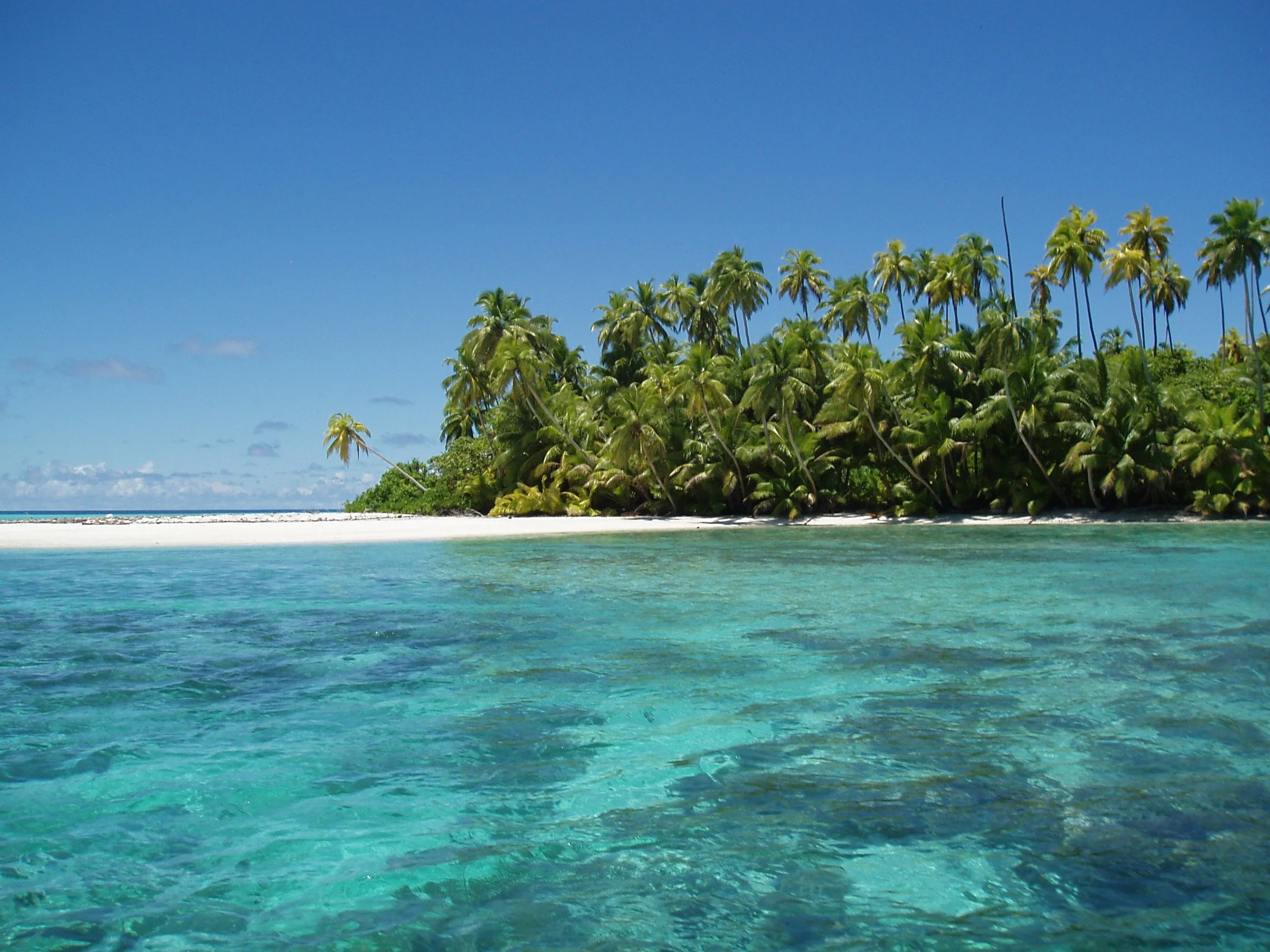
Salomons Atoll in the Chagos Archipelago by Anne Sheppard. Sourced from Wikimedia Commons, accessed on the 8th July 2026.
Domestic fisheries catches in the Chagos Archipelago are 25 times higher than official statistics show, according to a recent study by Sea Around Us – Indian Ocean and Sea Around Us researchers.
At a moment when the fate of the island group also known as the British Indian Ocean Territory is uncertain, a new paper in the Journal of the Indian Ocean Region highlights the importance of accounting for all fish removals to safeguard the area’s biodiversity values.
Located halfway between Tanzania and Indonesia, the Chagos Archipelago hosts the world's largest coral atoll, whose reefs represent half of those in good condition in the Indian Ocean. In 2010, the equivalent of its Exclusive Economic Zone (EEZ) was declared a no-take Marine Protected Area (MPA), excluding the territorial sea and inland waters.
But following a deal signed with the United Kingdom in May 2025, the Republic of Mauritius is slated to take ownership of the island group, and its plans includes a proposal to potentially reopen fishing in the MPA in exchange for revenue from domestic and foreign fishing access. Such revenue would add to the £101 million in annual payments Mauritius should receive, if transfer legislation is approved in the UK parliament, for allowing London to retain control of the existing military base in Diego Garcia, the main island.
Precisely that military base, which the UK operates jointly with the United States since the 1970s, is one of the main drivers of present-day fisheries catches in the area, as personnel have been allowed to fish recreationally even after the establishment of the MPA.
“But there is more to the story,” said Dirk Zeller, lead author of the recent study and director of the Sea Around Us – Indian Ocean and member of the Oceans Institute at the University of Western Australia. “Historically, the UK only reported these catches, but prior to the 1970s, people working in the coconut plantations that operated in the atolls since the 1700s fished for subsistence.”
Zeller and co-author Roshni Mangar, a Mauritian researcher collaborating with the Sea Around Us global initiative at the University of British Columbia, estimated these subsistence catches starting in 1950. Tapping into official records - including CIA documents - and complementing them with other sources of information, such as food consumption data, the scientists were able to estimate that combined subsistence and recreational catches reached, on average, almost 100 tonnes a year.
“Subsistence fishing, comprised mostly of invertebrates like shrimps and prawns, declined during the transition between the plantations and the military settlement, while recreational fishing peaked in the early 2000s, when military personnel on Diego Garcia increased following the 9/11 attacks in the US. The latter fished mostly tunas, bonitos, and mackerel,” Zeller said.
The researchers also reconstructed commercial catches taken by Mauritian vessels in the archipelago, via its distant water fishing (DWF) fleets, and logged them as domestic catches, thus adding to the total of unreported catches.
Accounts for these DWF vessels start in 1977, over 10 years after Britain recognized traditional fishing rights for Mauritius. At the time, catches ranged between 180 and 200 tonnes a year. They then peaked at 350 tonnes per year in the mid-1990s and declined to 10 to 40 tonnes a year after the establishment of the MPA in 2010.
“Mauritian commercial fisheries target mostly seabreams, sky emperors, and redfishes, but we also found that there has been a presence of foreign DWF vessels in the region since the 1950s, targeting mostly tuna and tuna-like species,” Mangar said. “Initially, those industrial fisheries retrieved about 100 tonnes a year. Effort increased, and by the late 1990s and early 2000s, they were extracting up to 17,000 tonnes of fish per year. Once the no-take MPA was set up, their catches declined, now amounting to about 600 tonnes a year.”
According to Mangar, although Japanese, South Korean, Taiwanese and USSR ships dominated these foreign catches from the 1950s to the 1990s, following the establishment of the MPA, only Taiwanese and Sri Lankan vessels have been deployed in Chagos, thus engaging in illegal fishing.
“The limited patrols have inadequate deterrent effects and, unfortunately, these illegal catches, although relatively low, do pose a biodiversity risk to the MPA,” Mangar said. “Both sharks and sea cucumbers seem to be priority targets, and these taxonomic groups are highly vulnerable to rapid population depletion even under intermediate fishing pressure. This is why, in addition to patrols, vessel monitoring systems, port controls, regulatory sanctions, and flag-state collaborations should be implemented once the territory’s transfer is finalized, to make sure that the biodiversity values of the Chagos Archipelago are preserved.”
The paper “The Indian Ocean Chagos Archipelago: Fisheries history and Marine Protected Area” appeared in the Journal of the Indian Ocean Region, https://doi.org/10.1080/19480881.2026.2683941